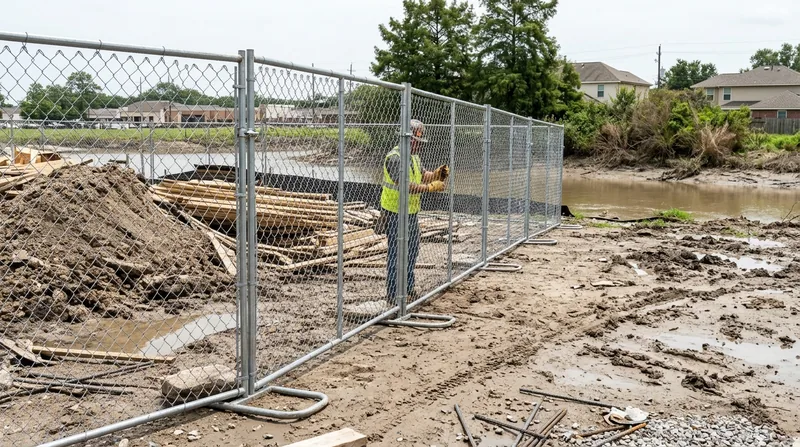




Construction sites, event grounds, and temporary work areas across New Orleans and the surrounding parishes need reliable commercial fence installation that can withstand weather, secure perimeters, and adapt to changing job layouts. Whether you're managing a multi-month renovation in the Warehouse District, a seasonal event in Metairie, or a utility project near drainage servitudes in Harvey, temporary and commercial fencing must anchor firmly, panel off work zones cleanly, and come down without leaving behind damage or debris. We install temporary construction fence, commercial security fencing, and silt fence systems that hold through demanding conditions and adjust around site constraints that are unique to the Greater New Orleans landscape. Since 2010, we've paneled off job sites and event grounds for contractors, property managers, and event coordinators across Orleans and Jefferson Parish. We work fast, respect your timeline, and build fencing that does the job without cutting corners.
Why Temporary and Commercial Fencing Matters on New Orleans Job Sites
A job site without proper perimeter control creates liability, security gaps, and compliance issues. Construction site fencing protects workers, deters unauthorized entry, contains dust and debris, and signals to the public that an area is off-limits. In New Orleans, where many projects sit adjacent to active streets, drainage easements, or neighboring properties, a well-installed temporary fence is not optional, it is a working tool that prevents accidents, protects your insurance coverage, and keeps inspectors satisfied.
- A properly anchored temporary fence prevents weather-related collapse and protects adjacent properties from falling panels.
- Silt fence and sediment barriers meet stormwater runoff requirements on sites with soil disturbance or excavation.
- Commercial security fencing with lockable gates controls access and reduces theft and vandalism during idle hours.
- Temporary fencing can be installed, adjusted, and removed without permanent damage to the underlying ground or utilities.
- Clear sight lines at street corners and property edges, maintained by proper fence height and placement, reduce traffic and pedestrian hazards.
Temporary fencing is the fastest way to bring a job site into compliance and keep it that way for the life of the project.
Key info: New Orleans and surrounding parishes enforce site safety and stormwater regulations through the local building department and environmental permitting. Confirm fencing requirements, height limits, and any sediment control mandates with the jurisdiction where your project sits. We work from your site plan and help you meet those standards.
For more on how fencing integrates with your broader site security strategy, see our chain link fence installation page, which covers the durable mesh systems often used in commercial and temporary applications.
How We Install Temporary and Commercial Fencing in New Orleans
Temporary fencing is not permanent, but it must be built to last. We assess your site layout, identify utilities and drainage lines using Louisiana 811 locates, and plan panel placement to maximize security while respecting property lines and sight-distance rules. Wind load, ground softness, and the length of your project all shape how we anchor the fence and space the posts. We use commercial-grade panels, tension bands, and anti-sag bracing to keep the fence plumb and tight through the job, and we install lockable gates where access control is needed.
- We call for a Louisiana 811 utility locate to mark underground electric, gas, water, and telecommunications lines before we dig any post holes.
- We measure the site, identify property lines and easements, and confirm any local height or setback rules with the building department.
- We set posts in concrete or tamp them firmly, depending on site conditions and the length of the project, ensuring the fence will not shift or lean.
- We install tension bands, stretcher bars, and cross-bracing to keep panels tight and prevent sagging or wave-like movement in wind.
- We fit lockable gates at entry points and adjust panel layouts to work around drainage servitudes, utility easements, or other site constraints.
- We remove the fence and restore the site when the job is complete, hauling away all materials and filling post holes.
The result is a secure, stable perimeter that stays in place and comes down cleanly when you need it.
Example: A renovation project in the Marrero area required temporary fencing around an active construction zone adjacent to a public sidewalk. We installed commercial chain link panels with anti-sag bracing and a self-closing gate at the main entry. The fence stayed plumb and secure for the eight-month job, required no adjustments, and was removed without leaving marks or damage to the surrounding property.
For details on the chain link and mesh systems we use in commercial applications, visit our fence repair page, which covers maintenance and repair of temporary and permanent installations alike.
Commercial Fencing Methods and Materials
| Approach | Description | Best for |
|---|---|---|
| Chain Link Panels (Commercial Grade) | Galvanized or vinyl-coated mesh in 6-foot or 8-foot heights, 11-gauge or heavier, mounted on steel posts with tension bands and stretcher bars. | Construction sites, utility work, event perimeters, and high-traffic areas where visibility and durability are priorities. |
| Temporary Panel Fencing (Modular) | Interlocking panels that bolt together and rest on portable feet or lightweight posts, designed for quick setup and relocation without permanent ground installation. | Short-term events, temporary access control, and sites where ground disturbance must be minimized or the fence will be moved multiple times. |
| Silt Fence (Erosion Control) | Geotextile fabric attached to wooden stakes or steel posts, installed along site perimeters and drainage paths to capture sediment and prevent stormwater runoff contamination. | Sites with soil excavation, grading, or fill work; required by state and local stormwater regulations on projects disturbing more than one acre. |
| Commercial Security Fencing (Gates and Locks) | Chain link or steel panel systems fitted with self-closing, self-latching gates and padlocks or key-card access for controlled entry and equipment protection. | Contractor storage yards, equipment staging areas, and sites where theft prevention and access logging are essential. |
| Wind-Braced Temporary Fencing | Panels anchored with diagonal cross-bracing, guy-wires, or concrete footings to resist lateral wind load and prevent sagging, lean, or collapse in exposed locations. | Waterfront projects, elevated or open sites, and installations lasting through periods of sustained wind or heavy weather. |
Commercial and Temporary Fencing Cost in New Orleans: What to Expect
The cost of commercial fence installation depends on the type of fencing, the linear footage you need, site access, ground conditions, and how long the fence will stay in place. A temporary chain link fence on a well-prepared, accessible site costs less per linear foot than a silt fence installation on soft or sloped ground, which requires more frequent stake replacement and geotextile material. Labor for installation, removal, and site restoration also factors into the final price. We provide a free site quote that accounts for all of these variables, and we can give you a realistic estimate over the phone if you have basic measurements and site details ready.
The best way to understand your cost is to get 2 or 3 estimates from local fence contractors who have worked on similar projects in your area. Each contractor will assess ground conditions, utility locations, and site logistics differently, and their labor rates and material sourcing will vary. A free estimate from us includes a walk of the perimeter, a review of your site plan or sketch, and a clear breakdown of material, labor, and any site-specific costs such as utility locates or post-hole drilling in dense soil.
For a detailed pricing overview and to request your free estimate, visit our pricing page or call us at (504) 285-7187. We respond within 24 hours and can often schedule a site visit within 48 hours.
Commercial and Temporary Fencing Near Me: What New Orleans Contractors Should Know Before Hiring
Hiring a fencing contractor for a commercial or temporary job is a practical decision based on experience, insurance, references, and a clear understanding of what the law requires in your jurisdiction. In Louisiana, fence installation is not regulated by a state-level license, but projects valued at or above certain thresholds may require a licensed general contractor or a home improvement registration, depending on the scope and location. Always confirm with your local building department whether permits, inspections, or contractor licensing applies to your specific project. Beyond licensing, verify that any contractor you hire carries full general liability and workers' compensation insurance and can provide a certificate of insurance on request.
- Ask for references from recent commercial or temporary fencing projects in New Orleans, Metairie, Gretna, or nearby areas, and contact at least two to verify quality, timeliness, and site cleanup.
- Request a copy of the contractor's general liability and workers' compensation insurance, and verify that the policy is current and covers fence installation work.
- Confirm that the contractor will call Louisiana 811 for a utility locate before digging, and ask to see the locate request or ticket.
- Get a written estimate that itemizes material, labor, site prep, and removal, and includes a timeline and any contingencies for weather or site delays.
- Check whether the contractor has worked with your local building department on similar projects and understands local height, setback, and safety rules.
- Ask how the contractor handles site restoration, waste removal, and any damage to adjacent properties, and ensure it is covered in the estimate.
A contractor who takes time to understand your site, communicates clearly, and stands behind their work will save you money and headaches in the long run.
Ready to get started? Contact us at our contact page to request your free estimate, or call (504) 285-7187 to discuss your project details right away.
Commercial & Temporary Fencing in New Orleans: Pricing Guide
| Service | Price | Details |
|---|---|---|
| Free Site Quote | Free | Includes perimeter walk, site assessment, utility locate coordination, and written estimate with all labor and material costs itemized |
| Temporary Chain Link Fencing | Starting at $18 per linear foot | Commercial-grade 6-foot or 8-foot panels, galvanized or vinyl-coated, installed with tension bands and anti-sag bracing on concrete-set posts |
| Silt Fence and Erosion Control | Starting at $8 per linear foot | Geotextile fabric on wooden or steel stakes, stormwater-compliant installation, maintenance and replacement throughout project duration included |
| Modular Temporary Panels | Starting at $12 per linear foot | Lightweight interlocking panels for quick setup and relocation, no ground disturbance, portable feet or temporary posts, ideal for short-term events |
| Commercial Security Gates and Hardware | Starting at $400 per gate | Self-closing self-latching hardware, lockable mechanisms, installation and adjustment included, fits standard chain link or panel openings |
| Site Removal and Restoration | Starting at $1,200 | Complete fence removal, post-hole filling, debris hauling, and site cleanup upon project completion or at end of temporary use period |
Indicative pricing, the exact cost depends on square footage, finish, and site access. Free personalized estimate within 24h at (504) 285-7187.


