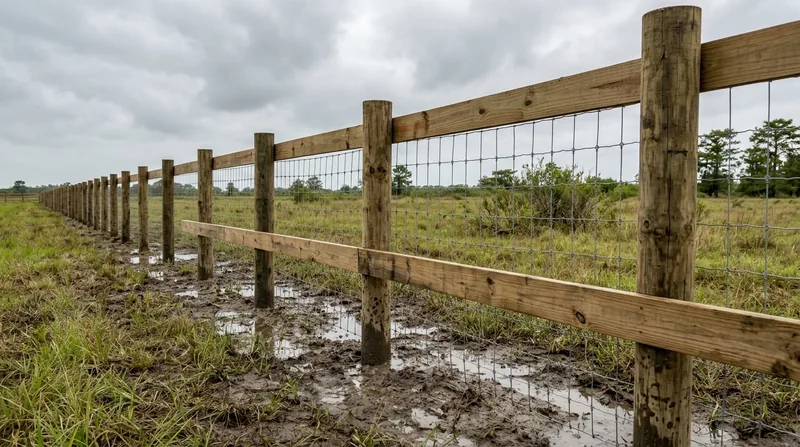




Farm fence installation in New Orleans and the surrounding parishes demands materials and methods built for soft, waterlogged ground and hurricane-season wind. The single-family and small acreage properties across the Greater New Orleans area, from Chalmette to Houma, sit on clay-heavy soil that shifts and drains slowly, which means fence posts must go deep and stay braced to hold. We set posts in concrete, choose rot-resistant materials, and brace longer runs to stand up to the weather and the terrain. Since 2010, we have installed and repaired ranch fencing, split rail, pipe fencing, and no-climb horse fencing for homeowners and small operators across the region. A properly installed farm fence on this land will outlast a rushed job by years, and it starts with understanding what the ground requires.
Why Farm & Ranch Fencing Matters in New Orleans and Surrounding Parishes
Farm and ranch fencing in Greater New Orleans faces a unique set of challenges. The soil composition, moisture retention, and exposure to seasonal weather patterns mean that a fence built to typical inland specifications will fail faster here. Posts set shallow or in tamped earth alone will heave and rot at the ground line. Longer runs without proper bracing will rack and twist under wind load. The best farm fences in this region are engineered for the conditions, not copied from a template.
- We set posts deep in concrete to anchor them against soft ground and prevent settling over time.
- We choose materials that resist rot at the ground line, including pressure-treated pine and galvanized or powder-coated metal components.
- We brace longer runs with anti-sag bracing or cross-bracing to keep the fence square and stable through wind events.
- We space posts according to the fence type and the load it will carry, typically 6 to 8 feet for ranch fencing and 4 to 6 feet for horse fencing.
- We verify property lines and confirm setback and height rules with the local building department before we begin work.
These practices add cost upfront but eliminate callbacks and premature replacement later. Before you hire, confirm that your contractor understands the local soil and weather profile.
Local fact: Louisiana 811 utility locates are required by law before any digging. Call 811 or visit louisiana811.org to mark underground lines. We handle this step as part of our pre-installation work.
How We Install Farm & Ranch Fencing in New Orleans: From Survey to Completion
A solid farm fence starts with a clear understanding of the property line, the terrain, and the intended use. We work from your existing survey and install on the line you identify. We then assess soil conditions, plan post spacing and bracing, and choose materials that will hold in the local environment. The installation process is methodical, and every step matters.
- We confirm the property line and review any deed restrictions, HOA architectural standards, or local setback rules with you and the building department.
- We call 811 to mark underground utilities before any post holes are dug.
- We lay out the fence line and mark post locations based on terrain and the fence type you have chosen.
- We dig post holes to the depth required for your soil and frost conditions, typically 30 to 42 inches depending on post size and load.
- We set posts in concrete and allow adequate curing time before we install rails, pickets, or panels.
- We install the fence material (split rail, pipe, no-climb horse panels, or board-and-rail) and add cross-bracing or anti-sag hardware as needed.
- We inspect the completed fence for plumb, level, and secure attachment before we finish.
The entire timeline depends on the length of the fence line, the terrain, and the material chosen. A typical farm fence of 200 linear feet can take 3 to 5 working days. More complex jobs or those requiring extensive site prep may take longer. We provide a detailed estimate and timeline before we start.
Example: A homeowner in Marrero with a 1-acre parcel wanted a 250-linear-foot no-climb horse fence. We set posts 6 feet apart in concrete, installed galvanized horse panels, and added diagonal cross-bracing to resist wind. The job took 4 days. Two years later, the fence remains square and the posts show no settling.
Farm & Ranch Fencing Methods: Choosing the Right Approach for Your Property
Farm and ranch fencing comes in several material and construction styles. The right choice depends on the intended use (livestock containment, property boundary, wind or privacy screening), the terrain, your budget, and local regulations. Below is a breakdown of the most common approaches and when each makes sense.
| Approach | Description | Best for |
|---|---|---|
| Split Rail | Two or three horizontal rails mortised into vertical posts, typically 6 to 8 feet apart. Open design. Pressure-treated or naturally rot-resistant wood. | Property boundaries, aesthetic appeal, areas where visibility is valued. Not suitable for containing small livestock. |
| No-Climb Horse Fence | Galvanized steel mesh welded to horizontal rails, mounted on wooden or metal posts. Mesh opening prevents hooves from catching. Posts typically 6 feet apart. | Horse containment, small livestock, areas exposed to wind. Durable and low-maintenance. Higher cost than split rail. |
| Pipe Fence | Steel pipe posts and rails, typically 1.5 to 2 inches in diameter, galvanized or powder-coated. Posts set in concrete. Heavy-duty construction. | High-load areas, equipment storage, premium livestock containment. Minimal maintenance. Highest cost per linear foot. |
| Barbed Wire & Board Combination | Pressure-treated boards mounted on posts with barbed wire strands above. Posts typically 6 to 8 feet apart. Mixed material approach. | Cattle containment, large acreage, budget-conscious projects. Requires periodic wire tensioning and board inspection. |
Each method has trade-offs in durability, maintenance, visibility, and cost. We assess your land, your livestock or boundary goals, and your budget to recommend the approach that will serve you longest. We also handle fence post repair and replacement if an existing fence needs refreshing.
Farm & Ranch Fencing Cost in New Orleans: What to Expect
Farm and ranch fencing in the New Orleans area starts at around $13 per linear foot for basic split rail installations on level, accessible ground. Costs climb with material choice (pipe fence runs higher), terrain challenges (soft soil requires deeper post holes and more concrete), and site access. A 200-linear-foot split rail fence on a straightforward property might run $2,600 to $3,200. A no-climb horse fence of the same length will typically cost $4,000 to $5,500. Pipe fence can exceed $6,000 for 200 feet.
Several factors move the price up or down. Soft, waterlogged ground requires deeper post holes and more concrete, adding labor and material cost. If the fence line crosses dense brush or uneven terrain, clearing and site prep add time. Longer runs without breaks cost more per foot because of the labor involved in layout and installation. Gates, cross-bracing, and anti-sag hardware also increase the total.
The best way to know what your project will cost is to get a free estimate from a contractor who knows the local soil and terrain. We provide estimates within 24 hours at (504) 285-7187. For a detailed breakdown of pricing across all our services, visit our pricing page.
What to Look for When Hiring a Farm Fence Contractor Near Me in New Orleans
Hiring the right contractor for farm and ranch fencing in New Orleans means checking a few key boxes. Insurance and workers' compensation coverage protect you if someone is injured on your property. In Louisiana, fence installation is regulated by the state contractor licensing board when the project value reaches certain thresholds. Projects valued at $7,500 or more but less than $50,000 may require a home improvement registration, and projects at $50,000 or more require a licensed residential contractor. Confirm permitting and any licensing requirements with your local building department before signing a contract. We are fully insured and can provide a certificate of insurance on request.
Beyond insurance, ask for references from recent farm fencing jobs in your area. A contractor who has worked on properties similar to yours will understand local soil and weather challenges. Confirm that they call 811 before digging, verify property lines with you, and check local setback and height rules. If you have an HOA or deed restrictions, make sure the contractor understands those limits. Get multiple estimates and compare the approach, materials, and timeline, not just the price.
We have installed farm and ranch fencing across Greater New Orleans since 2010 and are members of the American Fence Association. If you are ready to discuss your project, contact us for a free, no-obligation estimate.
Farm & Ranch Fencing in New Orleans: Pricing Guide
| Service | Price | Details |
|---|---|---|
| Split Rail Fence Installation | Starting at $13/ft | Two or three horizontal rails, pressure-treated wood posts 6 to 8 feet apart, set in concrete on level accessible ground |
| No-Climb Horse Fence Installation | Starting at $20/ft | Galvanized welded mesh panels on wooden or metal posts, 6-foot spacing, includes cross-bracing and hardware for wind resistance |
| Pipe Fence Installation | Starting at $30/ft | Heavy-duty galvanized or powder-coated steel pipe posts and rails, 1.5 to 2 inches diameter, set in concrete, minimal maintenance |
| Site prep and terrain challenges | On estimate | Soft soil, brush clearing, uneven ground, or difficult access increases labor and materials, requiring an on-site assessment |
| Free estimate and 24-hour response | Included | Call (504) 285-7187 for a detailed walkthrough, material options, and timeline with no obligation to proceed |
Indicative pricing, the exact cost depends on square footage, finish, and site access. Free personalized estimate within 24h at (504) 285-7187.


